WAIAOperating model

How WAIA turns informal AI use into a visible operating rhythm.

WAIA connects baseline visibility, practical guidance, workplace learning, manager support and evidence-led follow-up so adoption becomes visible, guided and manageable.

Operating model

Seven steps that turn visibility into rhythm.

The loop keeps adoption practical. It starts with current use and ends with a stronger operating standard.

01

See current AI use

Establish the current operating picture.

02

Set clear standards

Define expectations for use, review and escalation.

03

Bring people into scope

Connect the right employees, managers and teams.

04

Support real work

Make guidance and learning useful inside live workflows.

05

Capture evidence

Record lightweight examples of guidance being applied.

06

Focus manager follow-up

Use visible gaps to direct practical support.

07

Improve the operating standard

Strengthen expectations as adoption develops.

Organisation journey

A practical start, not a transformation programme.

WAIA begins with the organisation's current situation and turns it into a manageable first rollout.

01

Fit conversation

Discuss current AI use, the operating concern and who needs to be involved.

02

Confirm scope

Agree the eligible population, administrators, sponsor and first rollout priorities.

03

Configure the organisation

Set the organisation view, guidance, baseline and initial learning pathway.

04

Establish the baseline

Create the initial operating picture before informal use becomes standard practice.

05

Publish guidance

Make practical expectations visible to the people who need to apply them.

06

Invite participants

Bring learners, managers and administrators into the first controlled rollout.

07

Review signals

Use progress, acknowledgement, evidence and attention signals to decide the next action.

Experience

What learners, managers and admins experience.

For learners

Practical workplace AI learning connected to local guidance.

  • Scenario-based judgement practice.
  • Visible organisation guidance.
  • Guidance acknowledgement.
  • Application evidence.
  • Reminders and progress.
For managers and admins

A current view of adoption and the follow-up that matters.

  • Baseline and attention signals.
  • Learner progress.
  • Guidance acknowledgement.
  • Evidence coverage.
  • Practical rollout toolkit.
Product screenshots

The product connects the operating picture to next action.

Baseline

From result to action

The baseline points back to practical improvement areas inside WAIA.
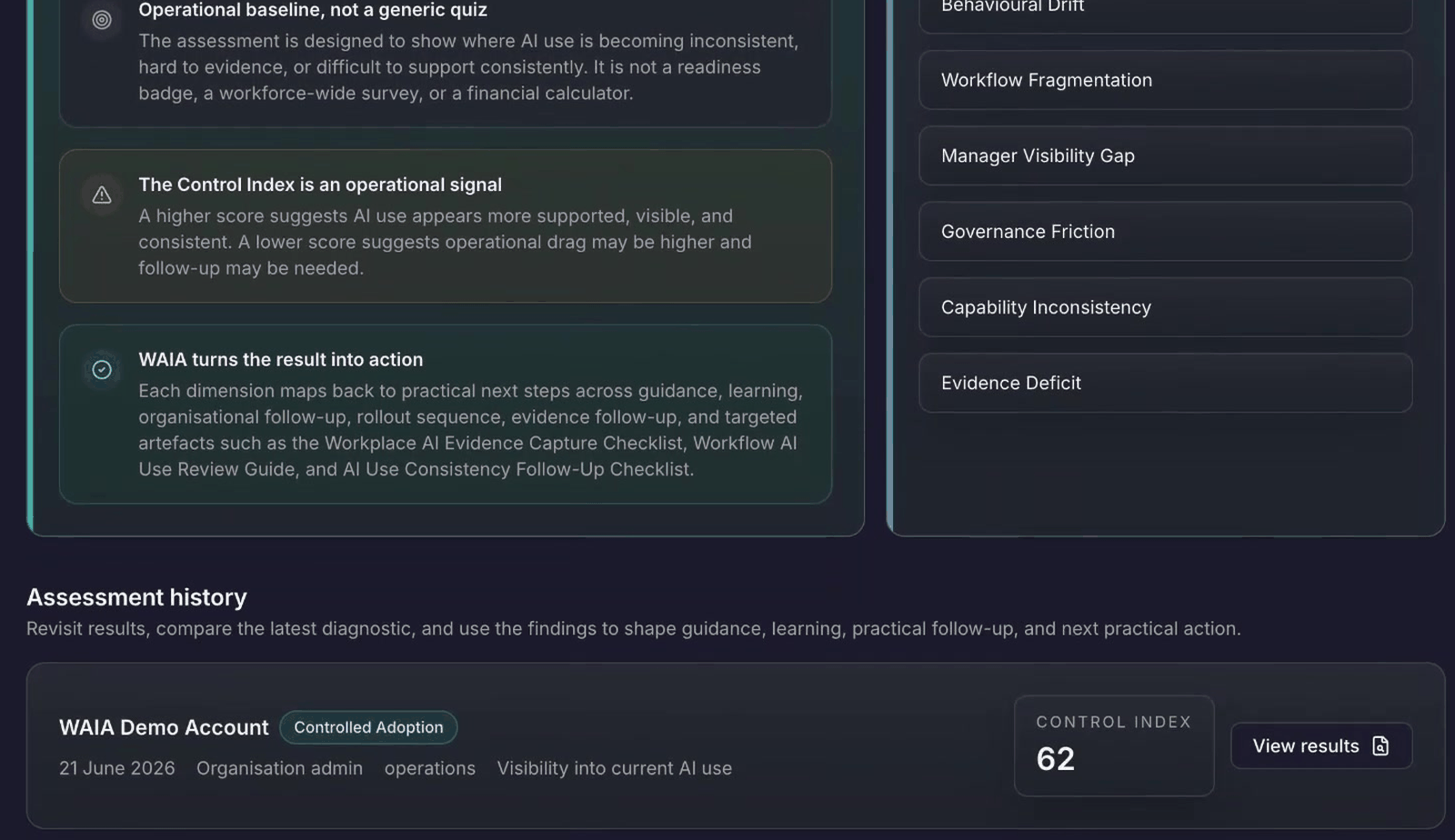
WAIA baseline result linked to practical guidance learning and follow-up actions
Each baseline result points back to practical improvement areas inside WAIA.
Toolkit

Support uneven adoption

Managers and rollout leads get practical resources for check-ins, review habits and rollout conversations.
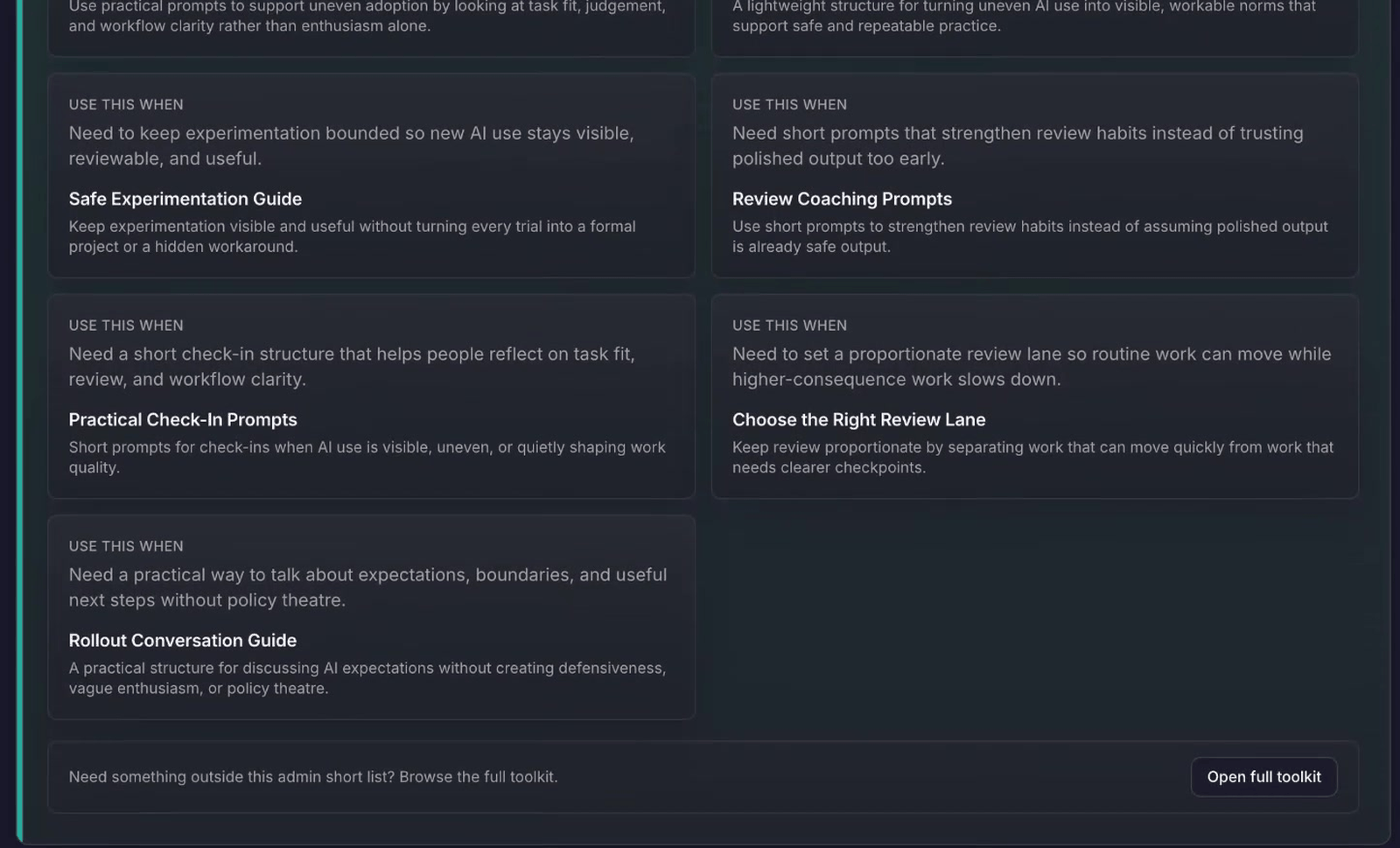
WAIA practical admin toolkit containing resources for workplace AI rollout
Practical tools for strengthening review habits, consistency and safe experimentation.
Guidance

Make standards visible

Organisation guidance gives people a local reference point for responsible use.
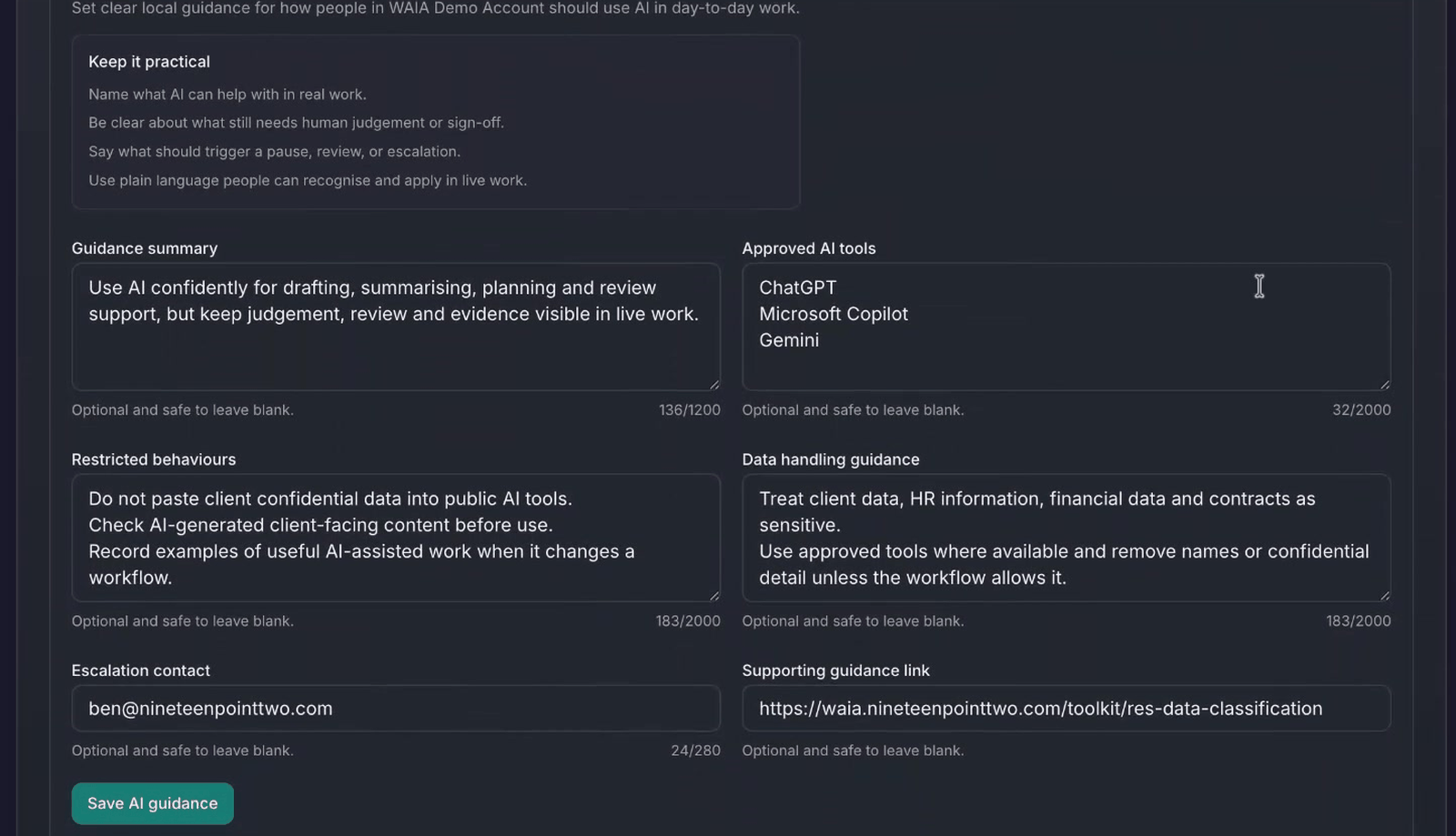
WAIA organisation guidance screen showing approved tools and data handling guidance
Guidance, boundaries and escalation points are visible where learners need them.
Product boundaries

What WAIA does not replace.

WAIA supports practical adoption control. It does not take ownership away from the organisation.

Advice and assurance

WAIA does not replace legal advice, regulatory advice, HR advice or compliance certification.

Governance ownership

WAIA does not replace internal governance ownership, risk decisions or human judgement.

Technical monitoring

WAIA is not enterprise GRC, technical AI model monitoring or employee surveillance.

Next step

Ask to see WAIA in the context of your organisation.

The first conversation is used to understand the current adoption picture, the eligible population and the first rollout scope.